Contents
Nongshim RedForce just torched Paper Rex 3-0 in the Masters Santiago final, and the headline almost wrote itself. A Korean Ascension team had become the first non-partnered roster to lift an international Valorant trophy.
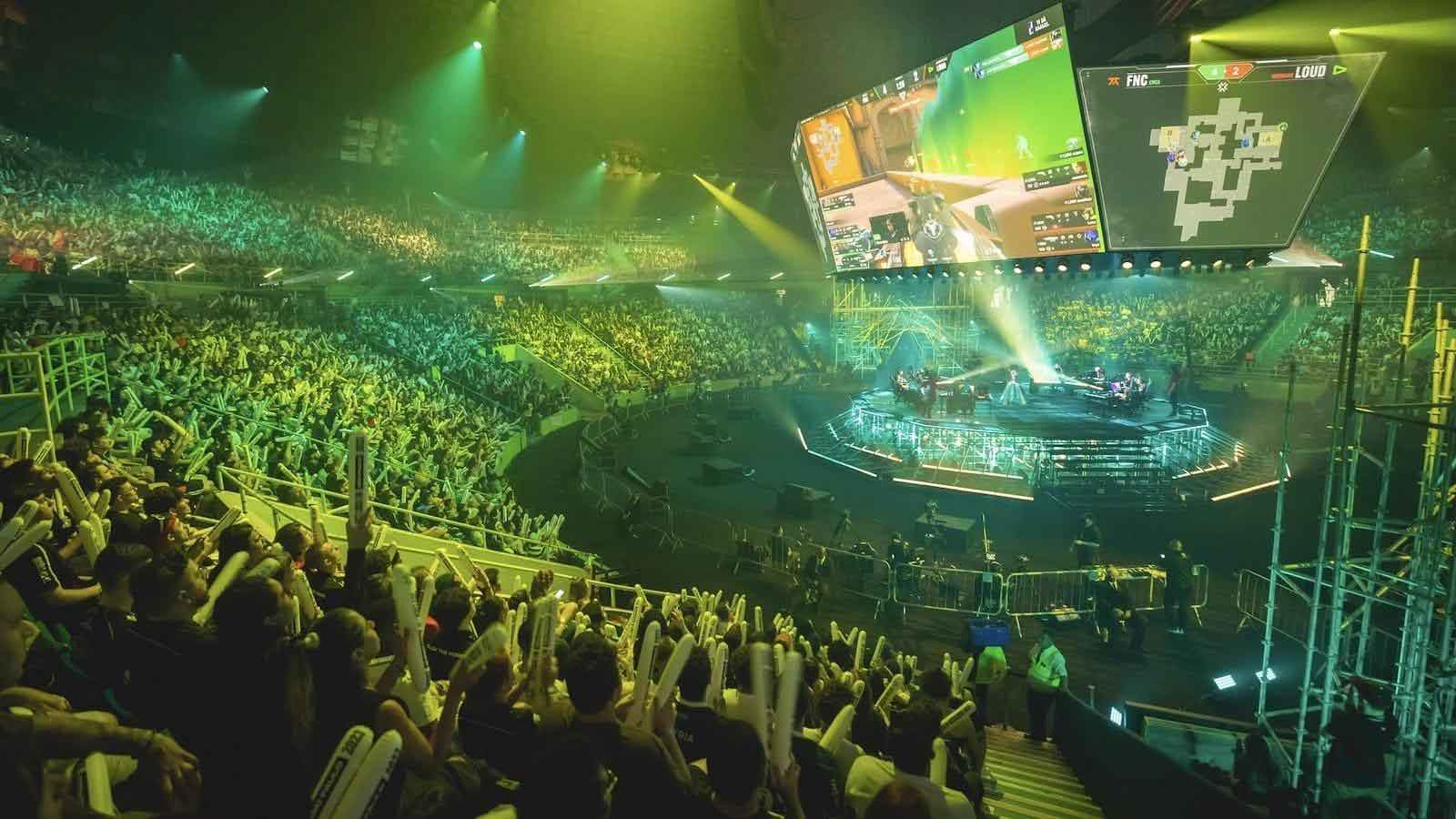
Five years after Riot Games shipped the game, this is what the competitive scene looks like. Big-org gravity matters less than it used to. The bracket runs deep across four continents. And most weekends, somebody upsets somebody you thought was untouchable.
That kind of story does not happen by accident. Valorant became one of the biggest games in esports because Riot built the rails for it from day one, and because the scene grew faster than even League of Legends did at the same stage.
The VCT now distributes more partner revenue than most franchise leagues. Viewership keeps stacking against rival shooters. And the player pool has gone properly global. Here is what is actually under the hood.
From Closed Beta to a Top-Tier Esport
If you track pro players or have spoken to any owners of the highest-ranked Valorant accounts, the competitive scene started off messy, as most do. Online cups, regional First Strike events in late 2020, and a patchwork of organizers stitching together what would later become the Valorant Champions Tour.
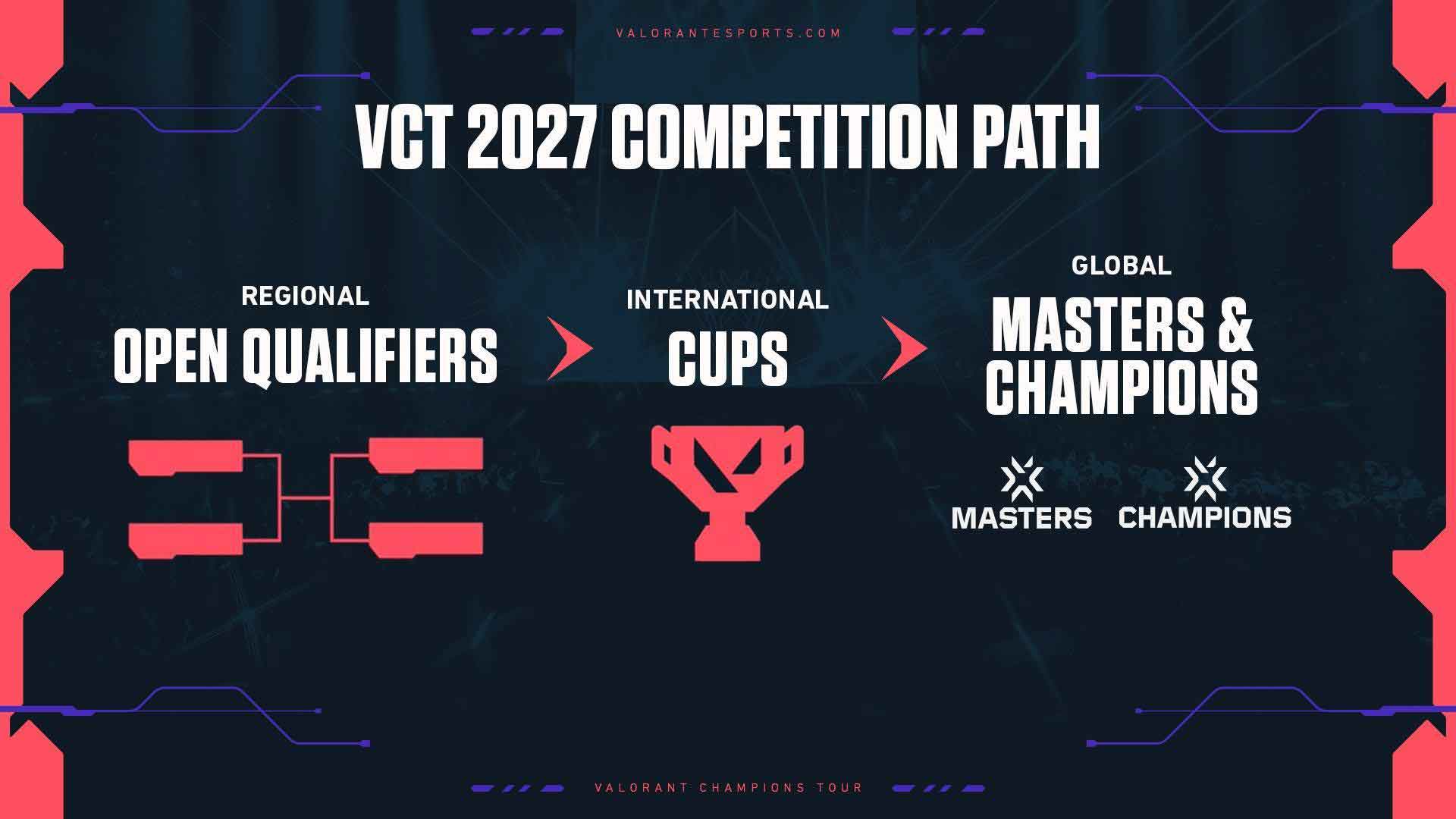
By the time Champions 2021 in Berlin landed, the format had calcified into something recognizable. Regional Challengers fed into international Masters events, with a year-end Champions tournament as the boss fight.
Then 2023 happened. Riot scrapped the open-circuit model and announced a partner-team structure across three international leagues. The decision was contentious.
It collapsed dozens of regional rosters into a smaller, more selective field and forced organizations to either get accepted or pivot to Game Changers and Challengers. But it also gave the top tier the financial stability that had historically kept tier 1 esports orgs operational.
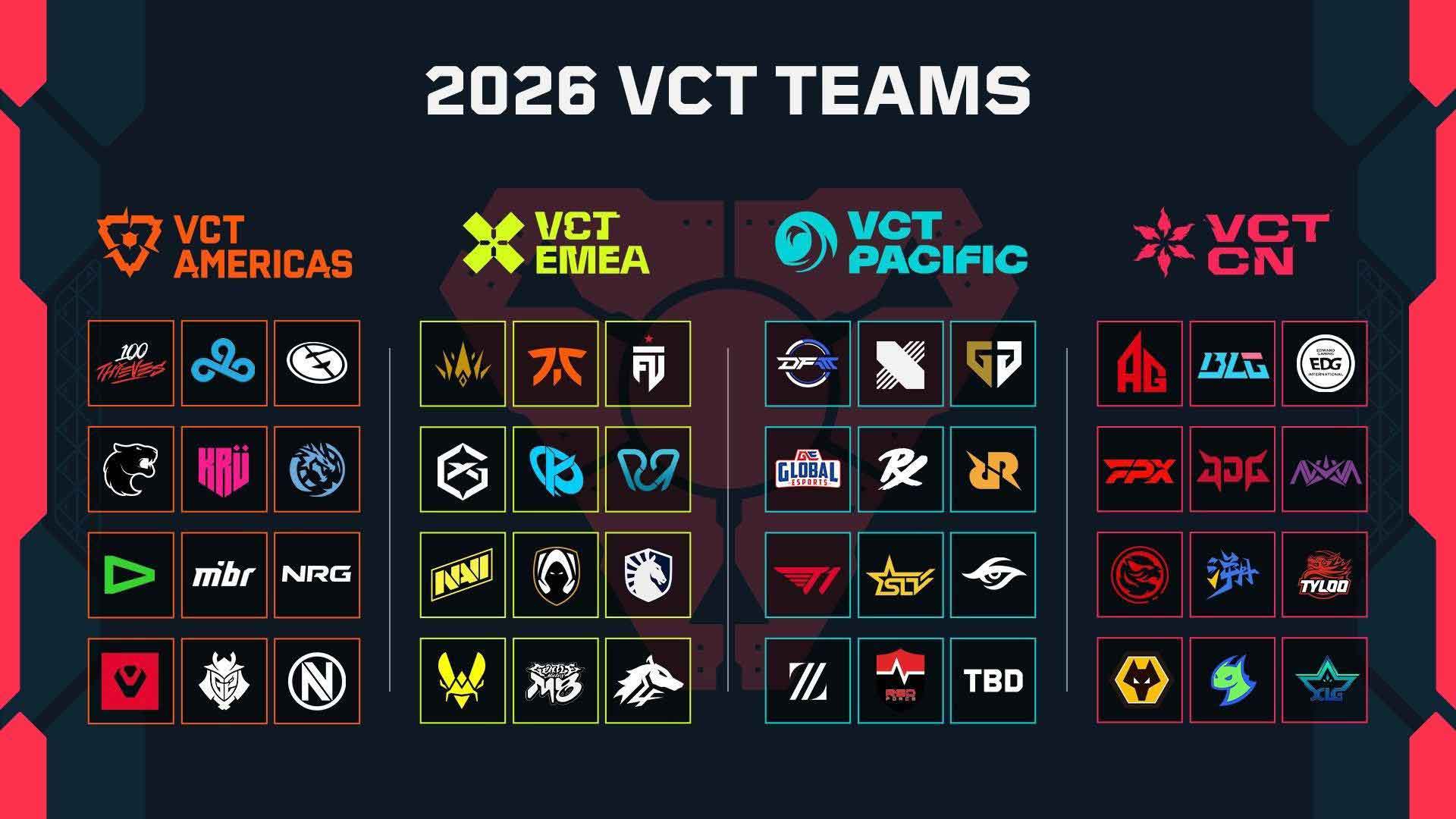
The 2026 circuit, which Riot announced back in October 2025, now runs four international leagues across Americas, EMEA, China, and Pacific.
Twelve partner teams per region, three Stage cycles, three Masters events, and Champions as the season-ending crown. It is the most refined version of the format yet.
Also Read: A Check on the Esports Out There to Play
Inside the VCT Franchise Model
Franchise leagues are not new to esports, but Riot’s version of one has aged better than most.
The model rests on three things. Partner teams sign multi-year agreements that lock in their slot. Riot underwrites the production, scheduling, and policies and rules that make the league feel like a single competition rather than a stitched-together tournament series. And revenue sharing, which has grown every year since launch, gives orgs a real reason to invest in long-term roster and infrastructure spending.
That last part is where the math gets interesting. Partner teams collectively received over $105 million in 2025, up from $78.4 million in 2024. Esports-themed digital item sales accounted for $86 million of that 2025 total, which means players buying Champions bundles in-client are quietly funding the orgs they cheer for.
Here is how the four 2026 international leagues break down at a glance:
|
International League |
Region Covered |
Partner Teams |
Stage 1 Window |
|---|---|---|---|
|
VCT Americas |
North America, LATAM, Brazil |
12 |
Apr – May 2026 |
|
VCT EMEA |
Europe, Middle East, Africa |
12 |
Mar – May 2026 |
|
VCT Pacific |
South Asia, SEA, Oceania, Korea, Japan |
12 |
Apr – May 2026 |
|
VCT China |
China |
12 |
Mar – May 2026 |
The 2026 reshuffle saw Gentle Mates replace KOI in EMEA, Eternal Fire take the slot vacated by ULF Esports, and FULL SENSE step into Pacific in place of TALON Esports. The system has the kind of churn you want from a franchise model. Stable enough to plan around, flexible enough to push out underperformers.
Prize Pool Math and the Money Behind the Game
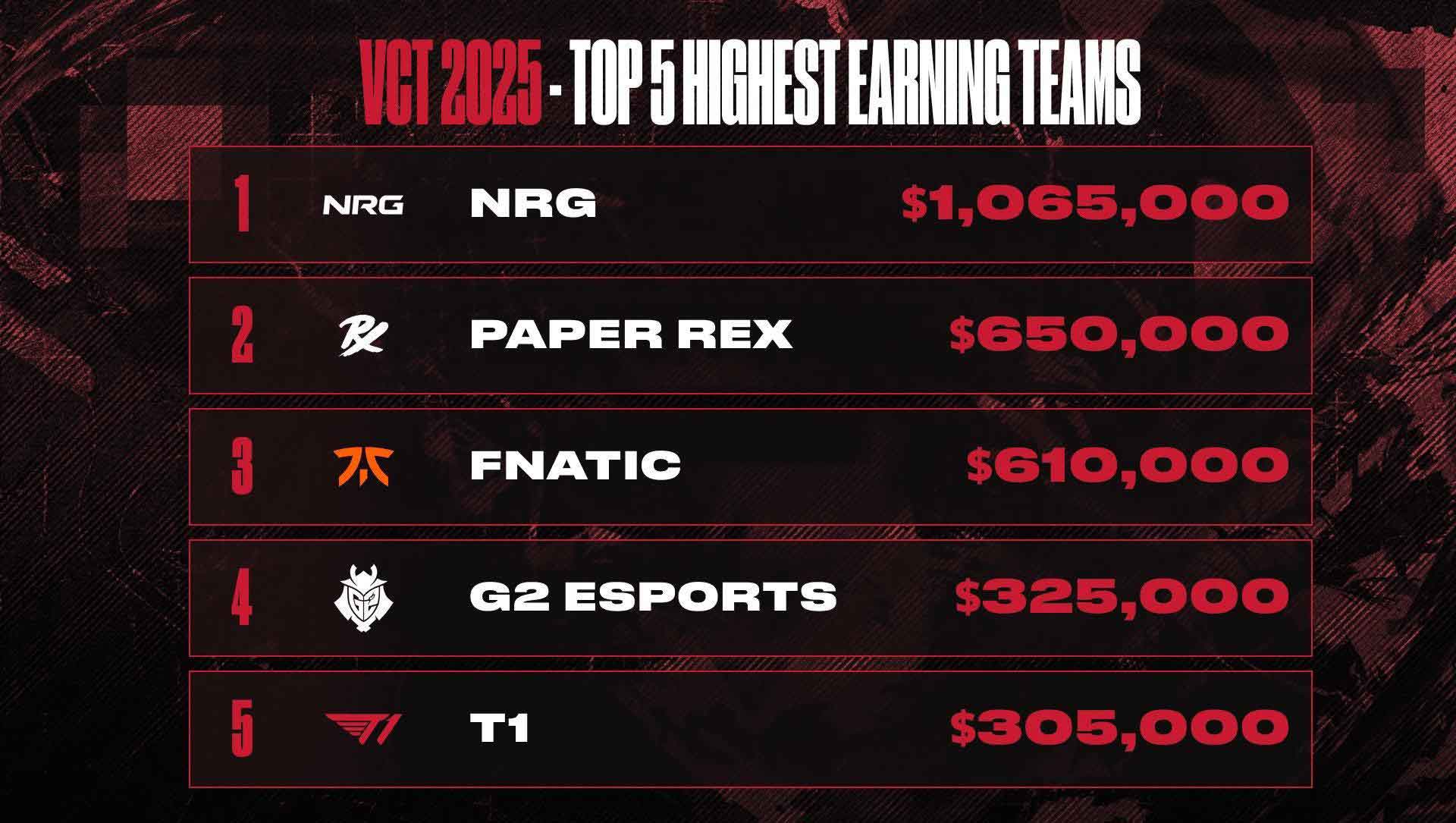
Prize pools in Valorant esports are not the headline that they are in Dota or some MOBAs, but the floor is rising fast. Total VCT prize money distributed in 2025 came in at roughly $4.5 million, holding steady year-over-year, and Champions 2026 alone runs a $2.25 million prize pool across 16 teams.$2.25 million prize pool
Salaries are where the real money is. Top NA pros earn between $420,000 and $480,000 in base salary, before tournament winnings, streaming, or content deals. A long way from the 2020 First Strike rosters scraping by on prize splits.
Viewership is the other story Riot keeps quietly winning. Masters Madrid 2024 set a tactical-shooter benchmark with 1.687 million peak concurrent viewers during the Sentinels and Gen.G grand final. Valorant Champions 2025 in Paris peaked at 1.473 million concurrent viewers on October 5, the third-highest mark in Valorant history.
Co-streamers accounted for 58.4 percent of the total hours watched at that event, a record share for VCT and a sign that the meta of how people consume the league has shifted toward Twitch personalities running their own broadcasts.
Gameplay and Competitive Integrity Under the Pro Lights
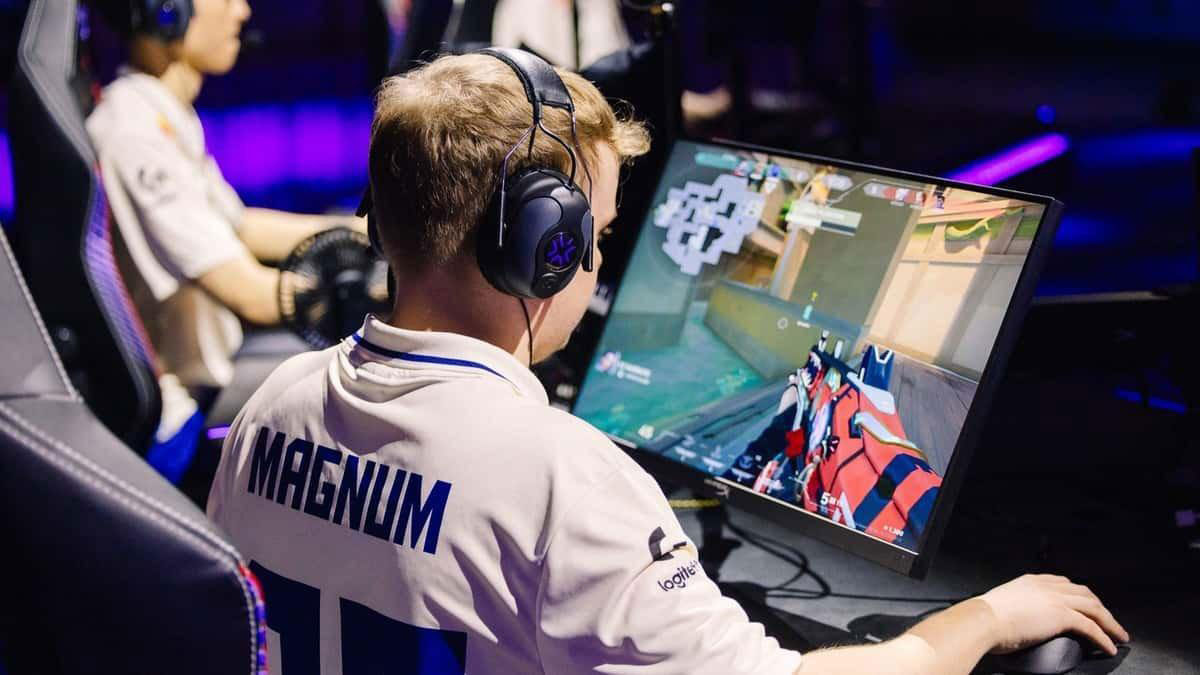
Hot take. Valorant is a better televised esport than most of its competition because the rounds are short, the agent kits create constant variety, and the map pool resets often enough to keep the meta from going stale.
Most pro rounds resolve in under 90 seconds. That cadence keeps broadcast energy up and makes the highlight reel friendly to clip culture. The agent system is the bigger structural advantage. Riot adds new agents on a roughly six-month cycle, and each release forces every team in the world to rebuild compositions. Iso, Clove, Tejo, and the rest of the post-launch roster have all triggered map-by-map metas nobody saw coming.
Map rotations matter just as much. Riot rotates the competitive map pool in and out roughly every Stage, which gives fans the same kind of rotating playstyle pressure that keeps fighting games fresh. Add in tight policies and rules around competitive integrity, demo replay tools, and an internal anti-cheat that pros actually trust, and you get a competitive format that is hard to game.
There is one area that needs work. Game Changers, Riot’s flagship women’s tier, is in a real bind. The 2024 Game Changers Championship peaked at over 450,000 viewers. The 2025 edition fell to roughly 220,000, the weakest peak the championship has ever posted.
100 Thieves, Cloud9, and YFP have all exited Game Changers rosters. Riot rebranded the academy circuit as Raidiant Academy for 2026, with a $150,000 NA prize pool, but the real test is whether org-side incentives return.
Valorant Champions Tour 2026 Storylines to Watch
Stage 1 is already producing the kind of upset arc that wider gaming and lifestyle outlets, including general valorant esports coverage sites, are actively tracking. Nongshim RedForce winning Santiago over PRX 3-0 was the headline of the spring.
The next major checkpoint is Masters London at the Copper Box Arena from June 6 to 21, the first London-hosted international Masters and the biggest indoor Valorant event in EMEA history.
A few storylines worth tracking through the rest of the season:
- Paper Rex’s bid for redemption. PRX entered 2026 as defending Masters Toronto champions, kept a stable roster, and just lost a final 3-0. They will be hunting in London.
- Edward Gaming and Bilibili Gaming asserting Chinese dominance. Both are loaded for Stage 1, and the China league is no longer a dark-horse region.
- Sentinels and the NA reset. After a quiet stretch, the org’s roster moves heading into America’s Stage 1 are getting the most second-screen attention of any North American team.
- Fnatic’s road back. Fnatic missed Santiago. Their EMEA Stage 1 form has been spiky. A deep Master’s London run would silence a lot of obituaries.
Champions 2026 runs from September 24 to October 18, with 16 teams running the full bracket. Whoever has the best composite rating across both Stages and Masters cycles will arrive as the favorite. History suggests it will not stay that way for long.
The Future of Valorant Esports
The franchise model has its critics, but the floor it has built is real. Partner orgs have predictable revenue. Salaries finally make the FPS genre competitive with League of Legends.
Tournaments are professionally produced and structurally identical across regions, so the global stage feels like a single league rather than a federation of regional leagues.
The forward-looking bet here is not on whether Valorant will remain one of the biggest esports titles. The viewership, prize pools, and depth of the partner teams had already settled that. The bet is whether Riot can solve Game Changers, sustain CS2 defections at the pro level, and keep the agent design pipeline shipping kits that do not break the meta. Plenty of game design teams have failed at the third one. So far, Riot has not.
If you have been watching the scene from a distance, the next four months are the time to lock in. Masters London builds, Champions hype follows, and by October the storylines will pick themselves. The best players in the world are already grinding for it.